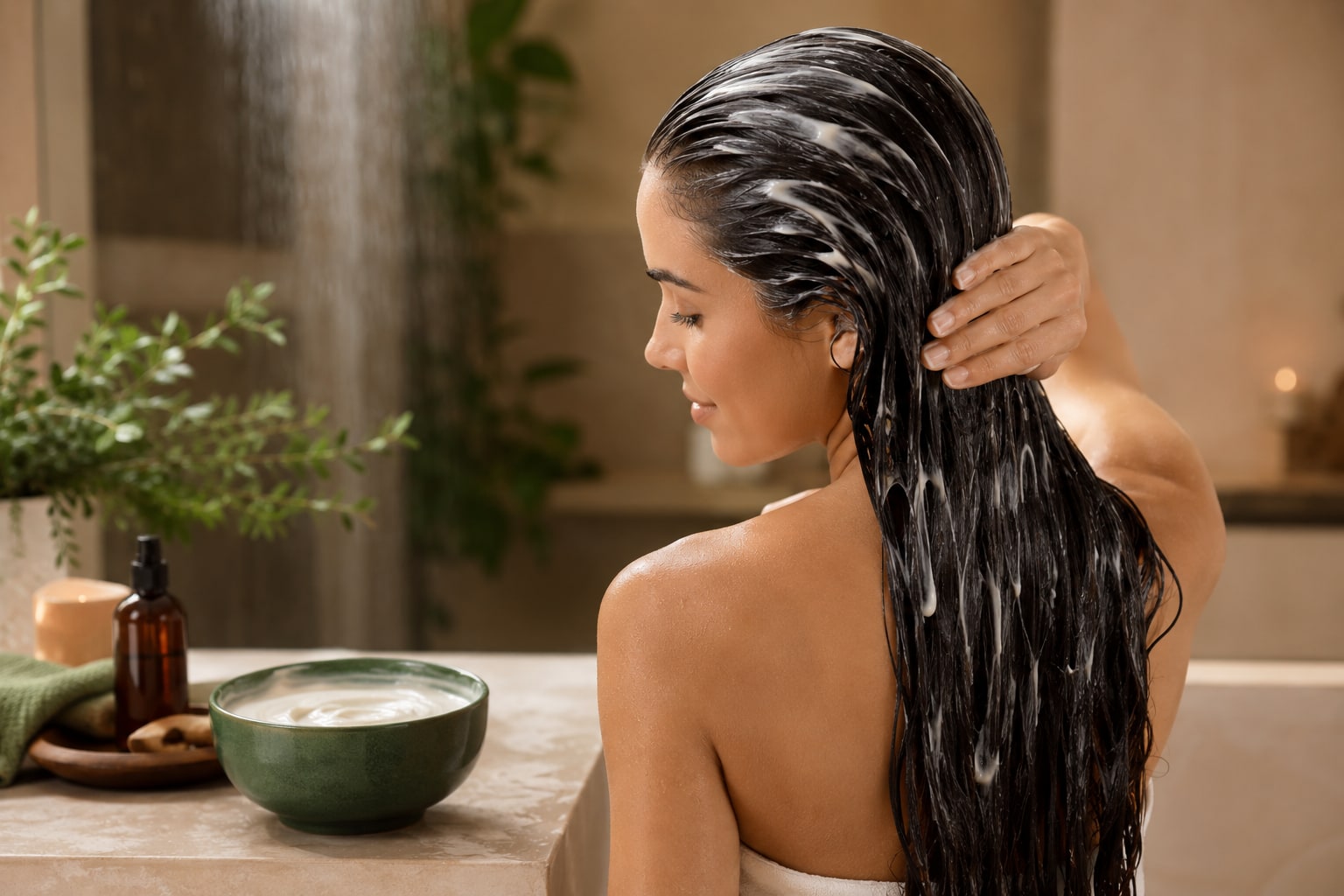
How-To
How Much Hair Mask to Use
How Much Hair Mask to Use — step-by-step guidance for better rinse-out results and less buildup.

Hair Masks
How-To · Updated July 2026
How Often Should You Use a Hair Mask — step-by-step guidance for better rinse-out results and less buildup.
Most healthy routines do not need a heavy mask every wash day. Weekly or biweekly treatments are enough for many textures — adjust when hair feels coated or still rough after conditioning.
Start with every 7–14 days. Color-treated hair may prefer the longer interval if masks contain protein. Dry, porous hair may tolerate weekly moisture masks if rinse is thorough.
Stiff, straw-like, or crunchy hair after masking can mean too much protein or too frequent use. Pause protein masks and switch to moisture masks for two to three weeks.
Humidity, heat styling, and swim exposure can justify an extra mask — not a permanent daily change. Clarify first if hair feels dull from product buildup.
If you use bond treatments or leave-in repair serums, avoid stacking multiple protein-heavy steps on the same day. Leave daily frizz control to leave-in products on Hair Serums.
If hair feels coated within 24 hours, you likely used too much product, applied too close to the root, or rinsed too quickly. Try half the dose next time and focus on mid-lengths and ends only. If hair feels stiff or straw-like, pause protein-heavy formulas for two to three weeks and use a moisture mask instead.
Masks are the weekly deep step — not a replacement for everyday conditioner unless your hair truly needs it. Between mask days, a lightweight conditioner and gentle detangling protect ends until the next treatment. For daily frizz or shine without added weight, leave-in serums on Hair Serums serve a different job than rinse-out masks.
Compare ingredient placement, rinse instructions, and jar size against how often you will actually mask. Our product catalog lists every mask we review with ratings and specs. Start from the best hair masks pillar if you are unsure which ingredient category fits your goal.
A wide-tooth comb in the shower, a shower cap for body heat, and sectioning clips for thick or coily hair improve results more than doubling product amount. Keep a note on your phone after each mask day — how hair felt on day two — so you adjust dose and frequency with evidence instead of guesswork.
Summer humidity may let you stretch mask frequency; winter indoor heat and frequent heat styling may justify an extra treatment. Let hair feel — coated, stiff, or still rough — drive the calendar, not the season alone.
| Wash | Action |
|---|---|
| Week 1 | Shampoo, mask on damp mids and ends, rinse until clear |
| Week 1 (mid-week) | Conditioner only — assess day-two feel |
| Week 2 | Repeat mask if ends still rough; skip if coated |
| Week 2 (mid-week) | Clarify only if buildup, then moisture mask |
Adjust timing to your actual wash frequency. The plan is a template for tracking feel, not a rigid calendar.
How Much Hair Mask to Use — step-by-step guidance for better rinse-out results and less buildup.
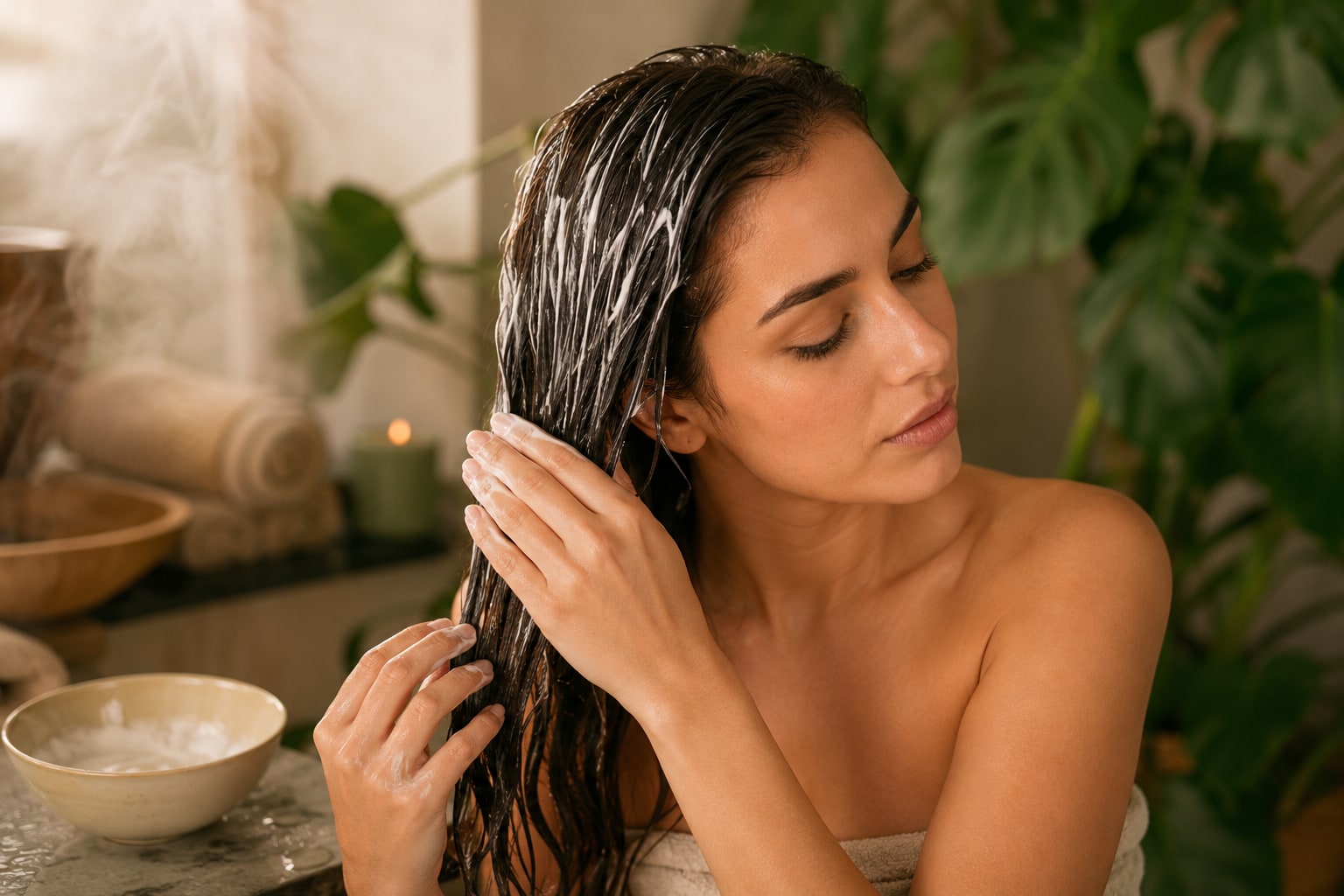
How to Apply a Hair Mask — step-by-step guidance for better rinse-out results and less buildup.
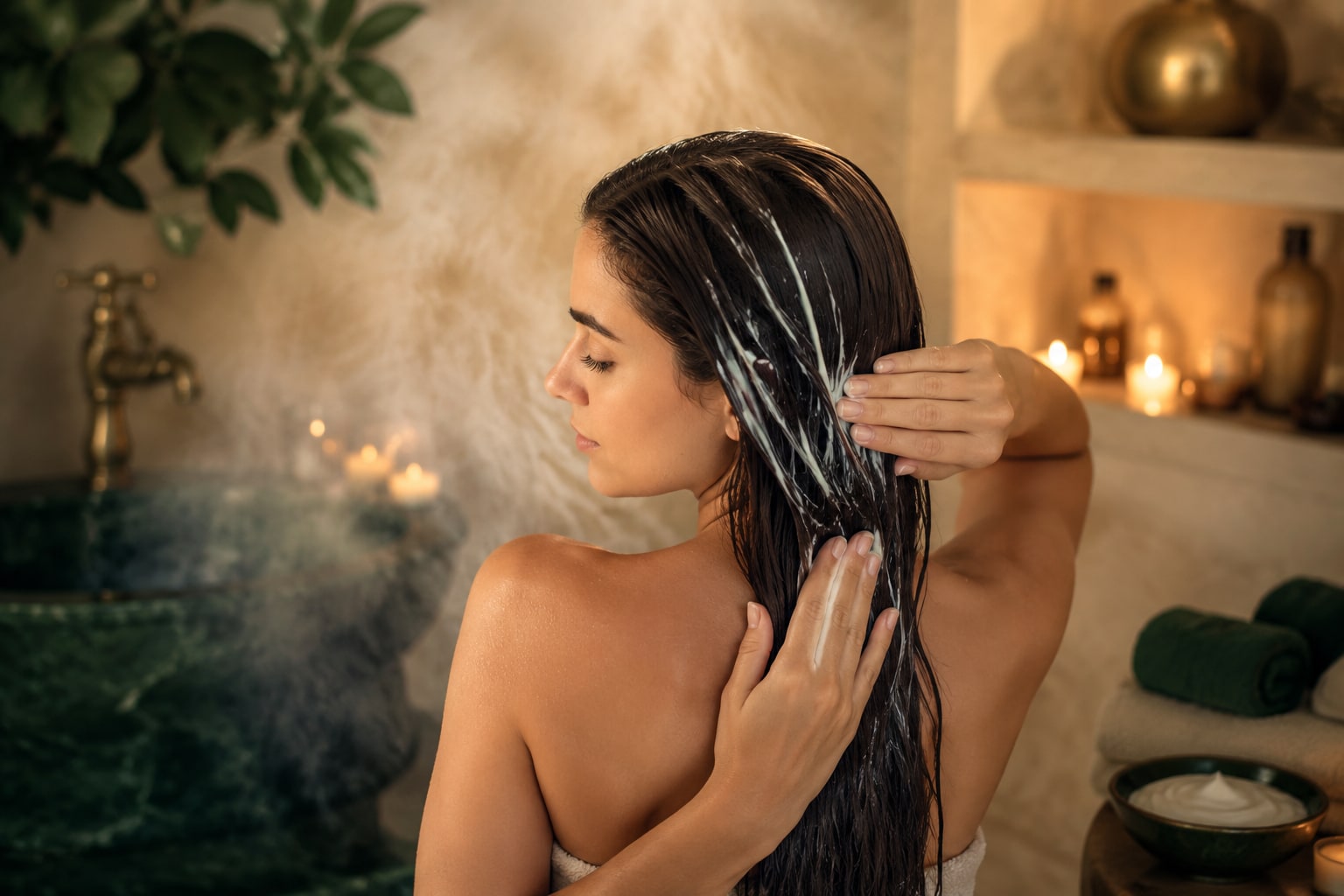
Multi-Masking Routine — step-by-step guidance for better rinse-out results and less buildup.